
two interesting topics from the pages of scientific american…both on probabilities. the first is an interesting article about the likelihood that humanity will survive to the 22nd century. britains astronomer royal, sir martin rees, says we’re fucked. in his book our final hour, he points out numerous advances in technology that may potentially lead to our destruction, such as biochem, nanotech, etc. rees even has an ongoing bet for $1000 that “a biological incident will claim one million lives by 2020.” what a happy scenario…for $1k too. as humanity dives into more and more advanced sciences, more risks come along with the advantages gained. as rees states, “we cant enjoy the benefits of science without confronting the risks.” theres hope tho…if environmental and biomedical issues took higher precedence in political agendas, with the u.s. taking the lead. he points out however that with our current administrations paranoid stem cell research deficiencies and shite environmental policies, its not looking particularly pretty. good for us…yay.
PROBABILITY OF GOD
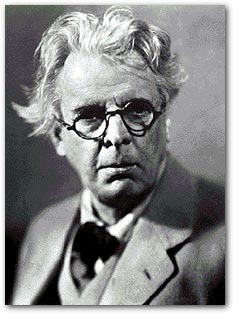
the second sci am article…decidedly more positive, and quite an interesting proposition at that, is about those who try and calculate the probability that god exists. beginning with a nice quote from a yeats poem, “the coat“:
i made my song a coat
covered with embroideries
out of old mythologies
from heel to throat;
but the fools caught it,
wore it in the world’s eyes
as though they’d wrought it.
song, let them take it,
for there’s more enterprise
in walking naked.
…the article takes off from there and examines the mingling of science and religion, subverting one to legitimize the other. and it brings to bear the book the probability of god by stephen unwin, a risk management consultant. rejecting the usual scientific creationist citations (intelligent design, etc…), he instead employs bayesian probabilities. bayesianism, like frequentism, utilizes probabilities assigned to variables. but whereas frequentism only assigns calculated probabilities to random events, bayesianism can assign subjective probabilities as well, regardless of calculated frequencies. in other words, the resultant calculations can vary from person-to-person, relative to their own determinations.
therefore taking unwins probability equation:
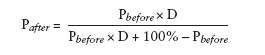
beginning with a 50-50 chance of existence (where D is the divine indicator scale. likelihood of evidence…10x, 1x, etc…) and going thru 6 lines of evidence, subjectivity already plays a part in the sequential equation. so in unwins equation, the probability that god exists comes to 67%, whereas the writers own equation turns up 2%. not exactly a concrete methodology, especially one that can contrast by 65%, but still interesting.
> dead by 2100 (via sci am)
> probability of god (via sci am)
*noises my brain made when i tried to read the article* pffffffffffft…oh shit! what just flew over my head ?!?
s’all good, its all probabilities anyhoo. and i scored less than 1%. 0.005%ish that god exists. as you can see, im quite religious.